
Products
Gas Pumps
Liquid Pumps
Industries & Applications
Bio pharmaceutical
Transportation
Respiratory
Printing
Medical Devices
Clinical Diagnostics
Food & Beverage
Knowledge Hub
Technology
White Papers
Webinars
Pumps Maintenance
About Us
News and Events
History
Values
Worldwide Locations
Distributors
Download Center
Careers

The accelerated adoption of artificial intelligence (AI) is driving unprecedented innovation across industries and reshaping how productivity is achieved. At the same time, this expansion is placing substantial demands on energy infrastructure, particularly within data centers that support AI‑intensive workloads. As reliance on diesel generators for backup power increases, controlling emission, most notably nitrogen oxides (Nox), has emerged as a key sustainability and compliance challenge.

This white paper discusses how Selective Catalytic Reduction (SCR) technology is used to address NOx emissions and outlines the contribution of Ingersoll Rand’s Thomas 2775 WOB‑L piston compressors and Air Dimensions (ADI) R‑Series pumps to emission control and regulatory compliance.
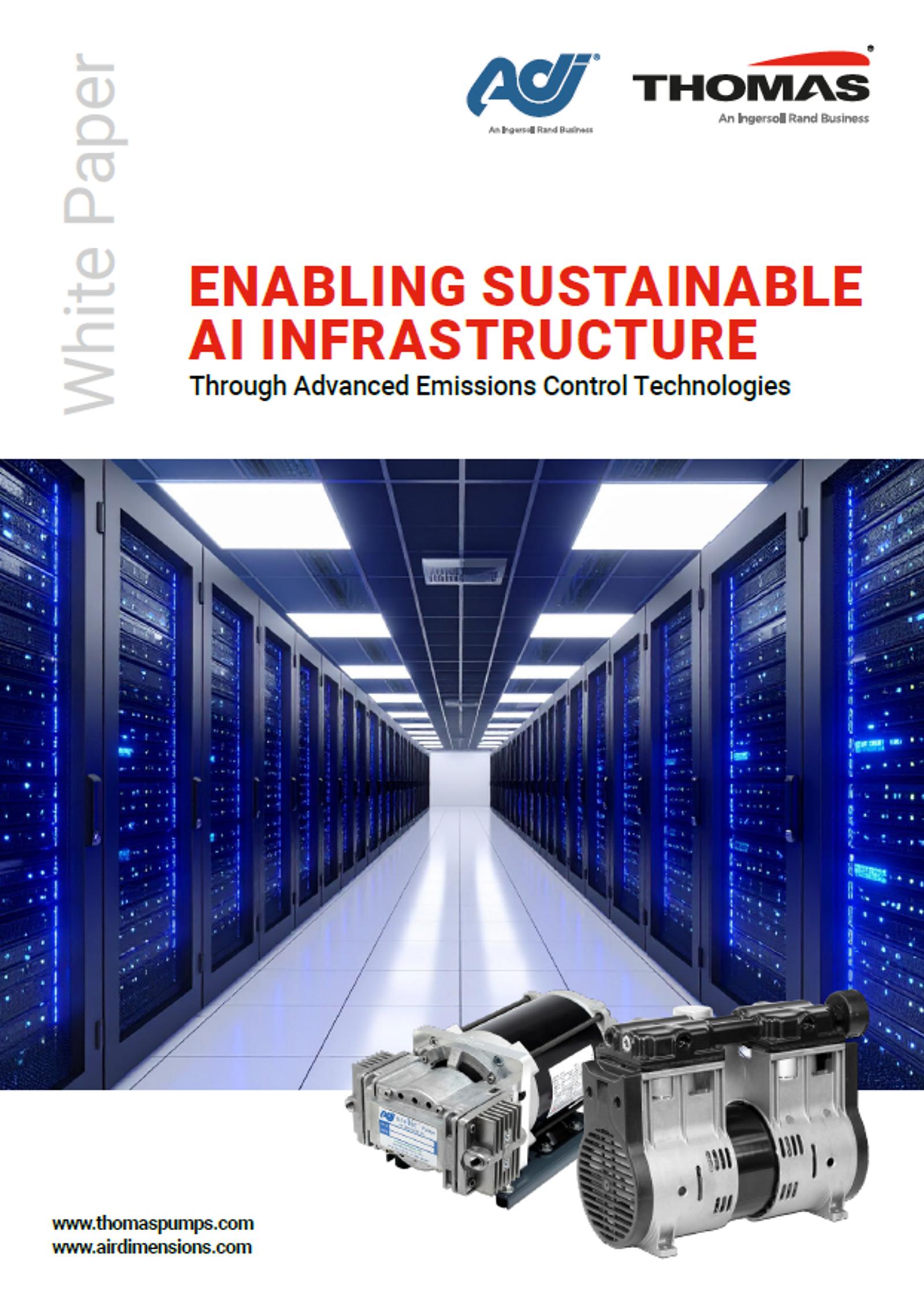
Thomas datacenter

How Thomas Fits into the SCR Architecture

An SCR system operates across three steps: DEF injection, ammonia formation, and catalytic conversion. The Thomas compressor plays its role at the very beginning by preparing DEF in a format the catalyst can use effectively. Reliable atomization directly affects pollutant conversion efficiency. 

This makes the compressor a key contributor to the overall emissions‑reduction chain.

FAQs


Catalysts require a predictable ammonia profile. The quality of the aerosol determines how much ammonia forms and how consistently it interacts with NOx.